


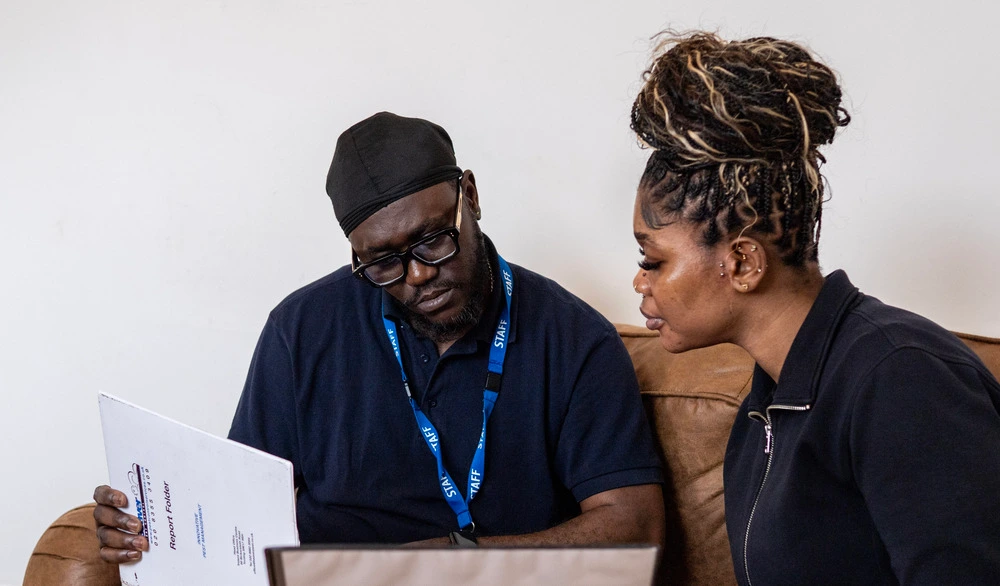
It is one of the questions we hear most from families and referrers before a placement begins. What actually happens? What does rehabilitation look like in practice, not in a brochure, but on a Tuesday morning or a Saturday afternoon?
Here is a straightforward answer.
The morning matters more than you might think
For many of our clients, the morning is one of the most clinically significant parts of the day. Acquired brain injury frequently disrupts sleep patterns, the ability to initiate activity and the capacity to manage the transition from rest to engagement. Getting up, managing fatigue and establishing a consistent morning routine are not small achievements. For some clients, they represent months of careful work.
Our Neuro Rehabilitation Coaches are alongside clients from the moment the day begins. Not to do things for them, but to support them to do things for themselves. The level of that support varies by individual and by where they are in their rehabilitation journey. For one person it is a prompt and a conversation. For another it is hands-on support with personal care and orientation.
What does not vary is the approach. Every interaction follows the same shared plan, with the same language, the same goals and the same responses from everyone on shift, whether it is seven in the morning or two in the afternoon.
Therapy runs through the whole day, not around it
Our Trans-disciplinary Team (TDT) includes Clinical Psychologists, Neuropsychologists, Occupational Therapists, Physiotherapists and Social Workers. The work they do in a therapy session is directly connected to how we support each client for the rest of the day.
A client working with our Occupational Therapist on sequencing and planning might spend the afternoon in the rehabilitation kitchen at No 66, our Rehabilitation Centre in Sundridge Park, working through a familiar task with a Neuro Rehabilitation Coach who understands exactly what they are practising and why. A client working with our Clinical Psychologist on emotional regulation will receive the same consistent responses from every member of staff they encounter throughout the day.
This is what our one plan, one team approach looks like in practice. Not a handover between professionals. One continuous system of support, every hour.
"Rehabilitation at High View is not something that happens during scheduled sessions. It is the texture of the whole day. Every conversation, every meal, every walk to the shops is part of the plan."
High View Care Services
Getting clients out into the community
Getting people out is one of the most important things we do, and one of the most underestimated.
For a person with an acquired brain injury, a trip into the community involves navigating unpredictable environments, managing fatigue, regulating emotion and drawing on executive and functional skills that may be significantly affected. Done well, it is one of the most valuable rehabilitation activities available. Done without structure, it can set progress back.
Our homes across South East London are well placed for this. No 66 in Sundridge Park is close to local amenities and The Glades shopping centre in Bromley. No 154 in Penge is a short walk from Penge High Street. Our Croydon Road homes sit near Crystal Palace National Sports Centre, and our Neuro Rehabilitation Coaches use it as part of the structured therapeutic programme.
A typical community session might include:
- A supported visit to a local shop, with specific goals around budgeting, decision-making or navigating a busy environment
- A walk to a nearby park, used as part of a spatial memory and orientation programme
- A trip to a cafe, practising conversation, managing sensory environments and building social confidence
- Transport practice by bus, tram or train, working toward the kind of independent travel that changes what is possible for someone's future
Every outing is purposeful, documented and part of the same plan the whole team works from.
The fortnightly review
Every two weeks, our Trans-disciplinary Team meets to review each client's progress in detail. This is not a brief check-in. It is a structured clinical review that examines what is working, what needs to change and what the plan looks like for the next two weeks.
This rhythm is one of the things that keeps our model sharp. Plans do not drift. Goals do not become outdated. When something is not working, we adjust it. When something is working, we build on it.
Families and referring professionals receive regular updates throughout, and are invited to formal reviews at three-month or six-monthly intervals, depending on the client's pathway.
What a day does not look like
A day at High View does not look like a client sitting in a lounge waiting for an activity. It does not look like a night team who are unfamiliar with the plan. It does not look like a therapy session on a Tuesday that is not revisited until the following Tuesday.
That gap is why we exist. More than twenty years on, closing it is still what we come to work to do.
If you would like to see this for yourself, we encourage it. Contact us to arrange a visit to the relevant home. We would rather you saw it than read about it.